Welcome to China Oncology,
China Oncology ›› 2025, Vol. 35 ›› Issue (11): 1056-1066.doi: 10.19401/j.cnki.1007-3639.2025.11.008
• Review • Previous Articles Next Articles
LIU Jingyu( ), YIN Tong, WU Yue, PENG Xiaobo, ZHAN Xianbao()(
 )
)
Received:2025-04-24
Revised:2025-07-14
Online:2025-11-30
Published:2025-12-12
Contact:
ZHAN Xianbao
E-mail:zhanxianbao@126.com
Supported by:Share article
CLC Number:
LIU Jingyu, YIN Tong, WU Yue, PENG Xiaobo, ZHAN Xianbao. Research status and progress of third-line treatment for metastatic colorectal cancer[J]. China Oncology, 2025, 35(11): 1056-1066.

Tab. 1
Comparison of mechanisms and key studies of approved drugs for third-line treatment of advanced colorectal cancer"
| Drug category | Drug name | Mechanism of action | Key study | Study design type | |
|---|---|---|---|---|---|
| Multi-kinase Inhibitor | Regorafenib | Inhibits VEGFR1-3, TIE-2, RET, KIT, etc., blocking angiogenesis and tumor microenvironment remodeling | CORRECT trial (2013, NCT01103323)[ | Phase Ⅲ randomized double-blind placebo-controlled trial | |
| Antivascular drug | TAS-102 | Trifluraldehyde is incorporated into DNA to cause chain termination, and Tipiracil inhibits thymidine phosphorylase to prolong drug exposure | RECOURSE trial (2015, NCT01607957)[ | Phase Ⅲ randomized double-blind placebo-controlled trial | |
| Anti-angiogenic drug | fruquintinib | Highly selectively inhibits VEGFR1-3 to reduce off-target toxicity | FRESCO trial (2018, NCT02314819)[ | Phase Ⅲ randomized double-blind placebo-controlled trial | |
| FRESCO-2 trial (2023, NCT04322539)[ | Phase Ⅲ randomized double-blind placebo-controlled trial | ||||
| Drug category | Drug name | Intervention (number of patients) | Median overall survival/month | Median progression-free survival/month | Grade ≥3 adverse events/% |
| Multi-kinase Inhibitor | Regorafenib | Regorafenib (n=505) vs placebo (n=255) | 6.4 vs 5.0; HR=0.77, 95% CI: 0.64-0.94; P=0.005 2 | 1.9 vs 1.7; HR=0.49, 95% CI: 0.42-0.58; P<0.000 1 | 54% vs 14%, including hand-foot syndrome (17%), fatigue (9%), diarrhea (7%), and hypertension (7%) in the Regorafenib group |
| Antivascular drug | TAS-102 | TAS-102 (n=534) vs placebo (n=266) | 7.1 vs 5.3; HR=0.68, 95% CI: 0.58-0.81; P<0.001 | 2.0 vs 1.7; HR=0.48, 95% CI: 0.41-0.57; P<0.001 | 69% vs 52%, including neutropenia (38%), leukopenia (21%), and anemia (18%) in the TAS-102 group |
| Anti-angiogenic drug | fruquintinib | fruquintinib (n=278) vs placebo (n=138) | 9.3 vs 6.6; HR=0.65, 95% CI: 0.51-0.83; P<0.001 | 3.7 vs 1.8; HR=0.26, 95% CI: 0.21-0.34; P<0.001 | 61.2% vs 19.7%, including hypertension (21.2%), hand-foot skin reaction (10.8%), proteinuria (3.2%), and diarrhea (2.9%) in the fruquintinib group |
| fruquintinib (n=461) vs placebo (n=230) | 7.4 vs 4.8; HR=0.66, 95% CI: 0.67-0.82; P<0.000 1 | 3.7 vs 1.8; HR=0.32, 95% CI: 0.27-0.39; P<0.000 1 | 63% vs 50%, including hypertension (14%), asthenia (8%), and hand-foot syndrome (6%) in the fruquintinib group | ||
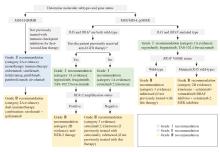
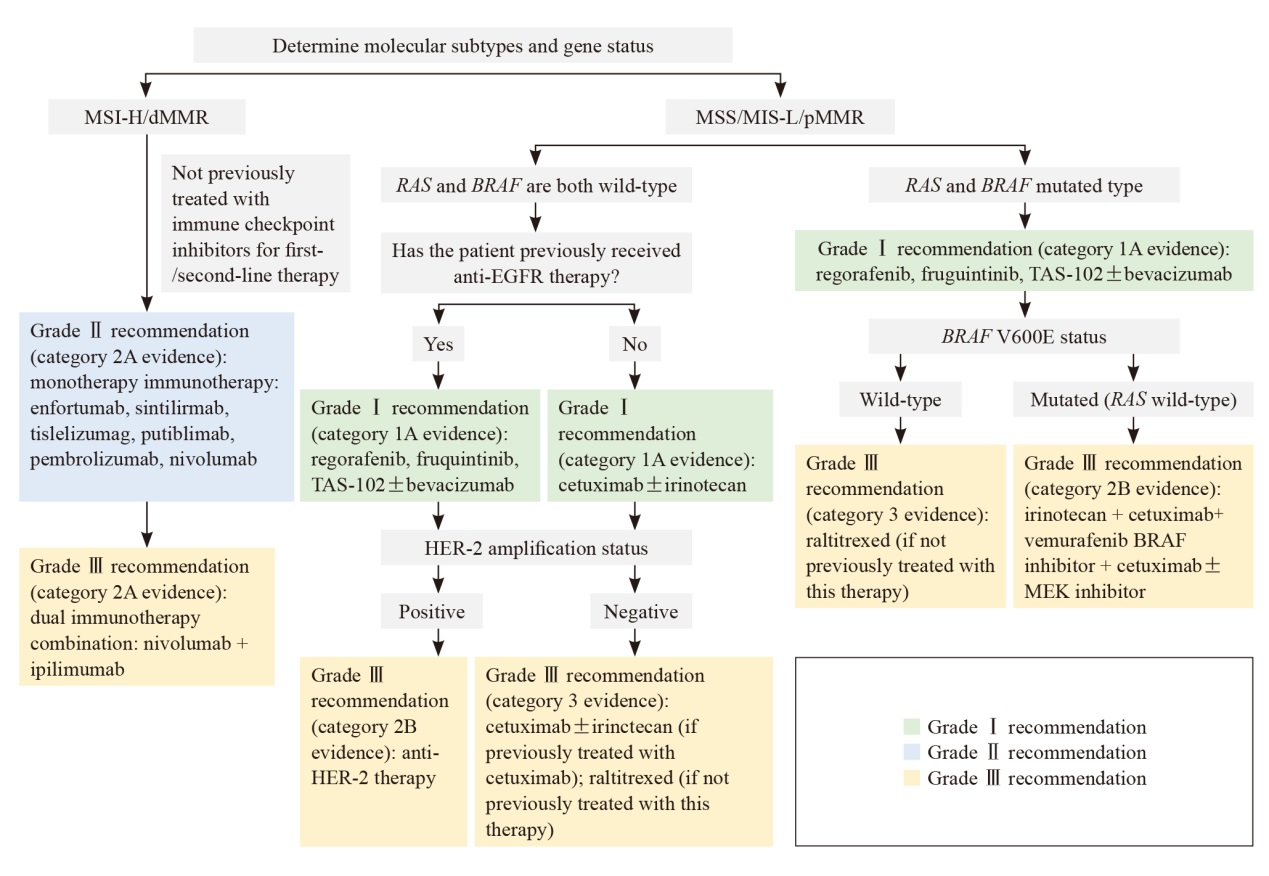
Fig. 1
Stratification flowchart for individualized treatment: a stratification flowchart for individualized third-line treatment of mCRC based on molecular subtypes, gene status, and treatment history"
| [1] |
DEKKER E, TANIS P J, VLEUGELS J L A, et al. Colorectal cancer[J]. Lancet, 2019, 394(10207): 1467-1480.
doi: S0140-6736(19)32319-0 pmid: 31631858 |
| [2] |
YOSHINO T, CERVANTES A, BANDO H, et al. Pan-Asian adapted ESMO clinical practice guidelines for the diagnosis, treatment and follow-up of patients with metastatic colorectal cancer[J]. ESMO open, 2023, 8(3): 101558.
doi: 10.1016/j.esmoop.2023.101558 |
| [3] |
SAINI K S, TWELVES C. Determining lines of therapy in patients with solid cancers: a proposed new systematic and comprehensive framework[J]. Br J Cancer, 2021, 125(2): 155-163.
doi: 10.1038/s41416-021-01319-8 |
| [4] | DENG T, DUAN J J, BAI M, et al. Third-line treatment patterns and clinical outcomes for metastatic colorectal cancer: a retrospective real-world study[J]. Ther Adv Chronic Dis, 2023, 14: 20406223231197311. |
| [5] |
GROTHEY A, VAN CUTSEM E, SOBRERO A, et al. Regorafenib monotherapy for previously treated metastatic colorectal cancer (CORRECT): an international, multicentre, randomised, placebo-controlled, phase 3 trial[J]. Lancet, 2013, 381(9863): 303-312.
doi: 10.1016/S0140-6736(12)61900-X pmid: 23177514 |
| [6] |
MAYER R J, VAN CUTSEM E, FALCONE A, et al. Randomized trial of TAS-102 for refractory metastatic colorectal cancer[J]. N Engl J Med, 2015, 372(20): 1909-1919.
doi: 10.1056/NEJMoa1414325 |
| [7] |
LI J, QIN S K, XU R H, et al. Effect of fruquintinib vs placebo on overall survival in patients with previously treated metastatic colorectal cancer: the FRESCO randomized clinical trial[J]. JAMA, 2018, 319(24): 2486-2496.
doi: 10.1001/jama.2018.7855 |
| [8] |
DASARI A, LONARDI S, GARCIA-CARBONERO R, et al. Fruquintinib versus placebo in patients with refractory metastatic colorectal cancer (FRESCO-2): an international, multicentre, randomised, double-blind, phase 3 study[J]. Lancet, 2023, 402(10395): 41-53.
doi: 10.1016/S0140-6736(23)00772-9 pmid: 37331369 |
| [9] | NAPOLITANO S, MARTINI G, CIARDIELLO D, et al. Targeting the EGFR signalling pathway in metastatic colorectal cancer[J]. Lancet Gastroenterol Hepatol, 2024, 9(7): 664-676. |
| [10] |
CIARDIELLO F, TORTORA G. EGFR antagonists in cancer treatment[J]. N Engl J Med, 2008, 358(11): 1160-1174.
doi: 10.1056/NEJMra0707704 |
| [11] |
KARAPETIS C S, KHAMBATA-FORD S, JONKER D J, et al. K-ras mutations and benefit from cetuximab in advanced colorectal cancer[J]. N Engl J Med, 2008, 359(17): 1757-1765.
doi: 10.1056/NEJMoa0804385 |
| [12] |
GROTHEY A, FAKIH M, TABERNERO J. Management of BRAF-mutant metastatic colorectal cancer: a review of treatment options and evidence-based guidelines[J]. Ann Oncol, 2021, 32(8): 959-967.
doi: 10.1016/j.annonc.2021.03.206 |
| [13] |
BARRAS D, MISSIAGLIA E, WIRAPATI P, et al. BRAF V600E mutant colorectal cancer subtypes based on gene expression[J]. Clin Cancer Res, 2017, 23(1): 104-115.
doi: 10.1158/1078-0432.CCR-16-0140 |
| [14] |
DI NICOLANTONIO F, MARTINI M, MOLINARI F, et al. Wild-type BRAF is required for response to panitumumab or cetuximab in metastatic colorectal cancer[J]. J Clin Oncol, 2008, 26(35): 5705-5712.
doi: 10.1200/JCO.2008.18.0786 |
| [15] |
MARTIN V, LANDI L, MOLINARI F, et al. HER2 gene copy number status may influence clinical efficacy to anti-EGFR monoclonal antibodies in metastatic colorectal cancer patients[J]. Br J Cancer, 2013, 108(3): 668-675.
doi: 10.1038/bjc.2013.4 |
| [16] |
DAY F L, JORISSEN R N, LIPTON L, et al. PIK3CA and PTEN gene and exon mutation-specific clinicopathologic and molecular associations in colorectal cancer[J]. Clin Cancer Res, 2013, 19(12): 3285-3296.
doi: 10.1158/1078-0432.CCR-12-3614 |
| [17] |
MISALE S, DI NICOLANTONIO F, SARTORE-BIANCHI A, et al. Resistance to anti-EGFR therapy in colorectal cancer: from heterogeneity to convergent evolution[J]. Cancer Discov, 2014, 4(11): 1269-1280.
doi: 10.1158/2159-8290.CD-14-0462 pmid: 25293556 |
| [18] |
PARSEGHIAN C M, LOREE J M, MORRIS V K, et al. Anti-EGFR-resistant clones decay exponentially after progression: implications for anti-EGFR re-challenge[J]. Ann Oncol, 2019, 30(2): 243-249.
doi: S0923-7534(19)31024-5 pmid: 31987421 |
| [19] |
SHEN L, LI Q, WANG W, et al. Treatment patterns and direct medical costs of metastatic colorectal cancer patients: a retrospective study of electronic medical records from urban China[J]. J Med Econ, 2020, 23(5): 456-463.
doi: 10.1080/13696998.2020.1717500 pmid: 31950863 |
| [20] |
MARTINELLI E, MARTINI G, FAMIGLIETTI V, et al. Cetuximab rechallenge plus avelumab in pretreated patients with RAS wild-type metastatic colorectal cancer: the phase 2 single-arm clinical CAVE trial[J]. JAMA Oncol, 2021, 7(10): 1529-1535.
doi: 10.1001/jamaoncol.2021.2915 |
| [21] |
NAPOLITANO S, DE FALCO V, MARTINI G, et al. Panitumumab plus trifluridine-tipiracil as anti-epidermal growth factor receptor rechallenge therapy for refractory RAS wild-type metastatic colorectal cancer: a phase 2 randomized clinical trial[J]. JAMA Oncol, 2023, 9(7): 966-970.
doi: 10.1001/jamaoncol.2023.0655 |
| [22] |
QUAN M, CHEN J D, CHEN Z Q, et al. China special issue on gastrointestinal tumors-Cetuximab retreatment plus camrelizumab and liposomal irinotecan in patients with RAS wild-type metastatic colorectal cancer: cohort B of the phase Ⅱ CRACK study[J]. Int J Cancer, 2023, 153(11): 1877-1884.
doi: 10.1002/ijc.v153.11 |
| [23] | MONTAGUT C. Circulating tumor (ct) DNA-guided anti-EGFR rechallenge strategy in metastatic colorectal cancer (mCRC): final results of the phase Ⅱ randomized CITRIC trial[C]. ESMO Congress: Barcelona, 2024: abstract LBA33. |
| [24] |
BILLER L H, SCHRAG D. Diagnosis and treatment of metastatic colorectal cancer: a review[J]. JAMA, 2021, 325(7): 669-685.
doi: 10.1001/jama.2021.0106 pmid: 33591350 |
| [25] |
PHAM H, DIXON E. Integration of next-generation sequencing in the surgical management of colorectal liver metastasis[J]. Ann Surg Oncol, 2023, 30(11): 6815-6823.
doi: 10.1245/s10434-023-13750-7 pmid: 37316745 |
| [26] | KOPETZ S, GUTHRIE K A, MORRIS V K, et al. Randomized trial of irinotecan and cetuximab with or without vemurafenib in BRAF-mutant metastatic colorectal cancer (SWOG S1406)[J]. J Clin Oncol, 2021, 39(4): 285-294. |
| [27] | TABERNERO J, GROTHEY A, VAN CUTSEM E, et al. Encorafenib plus cetuximab as a new standard of care for previously treated BRAF V600E-mutant metastatic colorectal cancer: updated survival results and subgroup analyses from the BEACON study[J]. J Clin Oncol, 2021, 39(4): 273-284. |
| [28] |
GERMANI M M, VETERE G, SANTAMARIA F, et al. Treatment of patients with BRAF V600E-mutated metastatic colorectal cancer after progression to encorafenib and cetuximab: data from a real-world nationwide dataset[J]. ESMO Open, 2024, 9(4): 102996.
doi: 10.1016/j.esmoop.2024.102996 |
| [29] |
YAEGER R, UBOHA N V, PELSTER M S, et al. Efficacy and safety of adagrasib plus cetuximab in patients with KRAS G12C-mutated metastatic colorectal cancer[J]. Cancer Discov, 2024, 14(6): 982-993.
doi: 10.1158/2159-8290.CD-24-0217 |
| [30] |
RAGHAV K P S, MOASSER M M. Molecular pathways and mechanisms of HER2 in cancer therapy[J]. Clin Cancer Res, 2023, 29(13): 2351-2361.
doi: 10.1158/1078-0432.CCR-22-0283 |
| [31] |
SARTORE-BIANCHI A, TRUSOLINO L, MARTINO C, et al. Dual-targeted therapy with trastuzumab and lapatinib in treatment-refractory, KRAS codon 12/13 wild-type, HER2-positive metastatic colorectal cancer (HERACLES): a proof-of-concept, multicentre, open-label, phase 2 trial[J]. Lancet Oncol, 2016, 17(6): 738-746.
doi: 10.1016/S1470-2045(16)00150-9 |
| [32] |
SIENA S, DI BARTOLOMEO M, RAGHAV K, et al. Trastuzumab deruxtecan (DS-8201) in patients with HER2-expressing metastatic colorectal cancer (DESTINY-CRC01): a multicentre, open-label, phase 2 trial[J]. Lancet Oncol, 2021, 22(6): 779-789.
doi: 10.1016/S1470-2045(21)00086-3 pmid: 33961795 |
| [33] |
RAGHAV K, SIENA S, TAKASHIMA A, et al. Trastuzumab deruxtecan in patients with HER2-positive advanced colorectal cancer (DESTINY-CRC02): primary results from a multicentre, randomised, phase 2 trial[J]. Lancet Oncol, 2024, 25(9): 1147-1162.
doi: 10.1016/S1470-2045(24)00380-2 pmid: 39116902 |
| [34] |
STRICKLER J H, CERCEK A, SIENA S, et al. Tucatinib plus trastuzumab for chemotherapy-refractory, HER2-positive, RAS wild-type unresectable or metastatic colorectal cancer (MOUNTAINEER): a multicentre, open-label, phase 2 study[J]. Lancet Oncol, 2023, 24(5): 496-508.
doi: 10.1016/S1470-2045(23)00150-X |
| [35] |
SPIEKMAN I A C, ZEVERIJN L J, GEURTS B S, et al. Trastuzumab plus pertuzumab for HER2-amplified advanced colorectal cancer: results from the drug rediscovery protocol (DRUP)[J]. Eur J Cancer, 2024, 202: 113988.
doi: 10.1016/j.ejca.2024.113988 |
| [36] |
STRICKLER J H, YOSHINO T, GRAHAM R P, et al. Diagnosis and treatment of ERBB2-positive metastatic colorectal cancer: A review[J]. JAMA Oncol, 2022, 8(5): 760-769.
doi: 10.1001/jamaoncol.2021.8196 pmid: 35238866 |
| [37] |
ZHU G M, PEI L J, XIA H W, et al. Role of oncogenic KRAS in the prognosis, diagnosis and treatment of colorectal cancer[J]. Mol Cancer, 2021, 20(1): 143.
doi: 10.1186/s12943-021-01441-4 |
| [38] |
CANON J, REX K, SAIKI A Y, et al. The clinical KRAS (G12C) inhibitor AMG 510 drives anti-tumour immunity[J]. Nature, 2019, 575(7781): 217-223.
doi: 10.1038/s41586-019-1694-1 |
| [39] |
FAKIH M G, KOPETZ S, KUBOKI Y, et al. Sotorasib for previously treated colorectal cancers with KRAS G12C mutation (CodeBreaK100): a prespecified analysis of a single-arm, phase 2 trial[J]. Lancet Oncol, 2022, 23(1): 115-124.
doi: 10.1016/S1470-2045(21)00605-7 |
| [40] | OU S I, JÄNNE P A, LEAL T A, et al. First-in-human phase Ⅰ/ⅠB dose-finding study of adagrasib (MRTX849) in patients with advanced KRAS G12C solid tumors (KRYSTAL-1)[J]. J Clin Oncol, 2022, 40(23): 2530-2538. |
| [41] |
YAEGER R, MEZZADRA R, SINOPOLI J, et al. Molecular characterization of acquired resistance to KRAS G12C-EGFR inhibition in colorectal cancer[J]. Cancer Discov, 2023, 13(1): 41-55.
doi: 10.1158/2159-8290.CD-22-0405 |
| [42] |
KUBOKI Y, FAKIH M, STRICKLER J, et al. Sotorasib with panitumumab in chemotherapy-refractory KRASG12C-mutated colorectal cancer: a phase 1b trial[J]. Nat Med, 2024, 30(1): 265-270.
doi: 10.1038/s41591-023-02717-6 |
| [43] |
FAKIH M G, SALVATORE L, ESAKI T, et al. Sotorasib plus panitumumab in refractory colorectal cancer with mutated KRAS G12C[J]. N Engl J Med, 2023, 389(23): 2125-2139.
doi: 10.1056/NEJMoa2308795 |
| [44] | Chinese Society of Clinical Oncology (CSCO) Colorectal Cancer Expert Committee. CSCO guidelines for the diagnosis and treatment of colorectal cancer 2024[J]. Chin J Oncol, 2024, 30(1): 1-50. |
| [45] |
TAIEB J, SVRCEK M, COHEN R, et al. Deficient mismatch repair/microsatellite unstable colorectal cancer: diagnosis, prognosis and treatment[J]. Eur J Cancer, 2022, 175: 136-157.
doi: 10.1016/j.ejca.2022.07.020 pmid: 36115290 |
| [46] | LE D T, KIM T W, VAN CUTSEM E, et al. Phase Ⅱ open-label study of pembrolizumab in treatment-refractory, microsatellite instability-high/mismatch repair-deficient metastatic colorectal cancer: KEYNOTE-164[J]. J Clin Oncol, 2020, 38(1): 11-19. |
| [47] |
LI J, DENG Y H, ZHANG W J, et al. Subcutaneous envafolimab monotherapy in patients with advanced defective mismatch repair/microsatellite instability high solid tumors[J]. J Hematol Oncol, 2021, 14(1): 95.
doi: 10.1186/s13045-021-01095-1 |
| [48] |
ANDRÉ T, BERTON D, CURIGLIANO G, et al. Antitumor activity and safety of dostarlimab monotherapy in patients with mismatch repair deficient solid tumors: a nonrandomized controlled trial[J]. JAMA Netw Open, 2023, 6(11): e2341165.
doi: 10.1001/jamanetworkopen.2023.41165 |
| [49] | ZHANG B, SONG Y, LUO S X, et al. Pucotenlimab in patients with advanced mismatch repair-deficient or microsatellite instability-high solid tumors: a multicenter phase 2 study[J]. Cell Rep Med, 2023, 4(12): 101301. |
| [50] |
KAWAZOE A, XU R H, GARCÍA-ALFONSO P, et al. Lenvatinib plus pembrolizumab versus standard of care for previously treated metastatic colorectal cancer: final analysis of the randomized, open-label, phase Ⅲ LEAP-017 study[J]. J Clin Oncol, 2024, 42(24): 2918-2927.
doi: 10.1200/JCO.23.02736 |
| [51] | LENZ H J, VAN CUTSEM E, LUISA LIMON M, et al. First-line nivolumab plus low-dose ipilimumab for microsatellite instability-high/mismatch repair-deficient metastatic colorectal cancer: the phase Ⅱ CheckMate 142 study[J]. J Clin Oncol, 2022, 40(2): 161-170. |
| [52] |
OVERMAN M J, GELSOMINO F, AGLIETTA M, et al. Nivolumab plus relatlimab in patients with previously treated microsatellite instability-high/mismatch repair-deficient metastatic colorectal cancer: the phase Ⅱ CheckMate 142 study[J]. J Immunother Cancer, 2024, 12(5): e008689.
doi: 10.1136/jitc-2023-008689 |
| [53] |
LIZARDO D Y, KUANG C Y, HAO S S, et al. Immunotherapy efficacy on mismatch repair-deficient colorectal cancer: from bench to bedside[J]. Biochim Biophys Acta Rev Cancer, 2020, 1874(2): 188447.
doi: 10.1016/j.bbcan.2020.188447 |
| [54] |
CHEN E X, JONKER D J, LOREE J M, et al. Effect of combined immune checkpoint inhibition vs best supportive care alone in patients with advanced colorectal cancer: the Canadian cancer trials group CO.26 study[J]. JAMA Oncol, 2020, 6(6): 831-838.
doi: 10.1001/jamaoncol.2020.0910 |
| [55] |
BULLOCK A J, SCHLECHTER B L, FAKIH M G, et al. Botensilimab plus balstilimab in relapsed/refractory microsatellite stable metastatic colorectal cancer: a phase 1 trial[J]. Nat Med, 2024, 30(9): 2558-2567.
doi: 10.1038/s41591-024-03083-7 pmid: 38871975 |
| [56] |
JOHNSON B, HAYMAKER C L, PARRA E R, et al. Phase Ⅱ study of durvalumab (anti-PD-L1) and trametinib (MEKi) in microsatellite stable (MSS) metastatic colorectal cancer (mCRC)[J]. J Immunother Cancer, 2022, 10(8): e005332.
doi: 10.1136/jitc-2022-005332 |
| [57] |
SAEED A, PARK R, PATHAK H, et al. Clinical and biomarker results from a phase Ⅱ trial of combined cabozantinib and durvalumab in patients with chemotherapy-refractory colorectal cancer (CRC): CAMILLA CRC cohort[J]. Nat Commun, 2024, 15(1): 1533.
doi: 10.1038/s41467-024-45960-2 |
| [58] |
WANG F, JIN Y, WANG M, et al. Combined anti-PD-1, HDAC inhibitor and anti-VEGF for MSS/pMMR colorectal cancer: a randomized phase 2 trial[J]. Nat Med, 2024, 30(4): 1035-1043.
doi: 10.1038/s41591-024-02813-1 pmid: 38438735 |
| [59] |
SEGAL N H, MELERO I, MORENO V, et al. CEA-CD3 bispecific antibody cibisatamab with or without atezolizumab in patients with CEA-positive solid tumours: results of two multi-institutional phase 1 trials[J]. Nat Commun, 2024, 15(1): 4091.
doi: 10.1038/s41467-024-48479-8 pmid: 38750034 |
| [60] |
LEMECH C, DREDGE K, BAMPTON D, et al. Phase Ⅰb open-label, multicenter study of pixatimod, an activator of TLR9, in combination with nivolumab in subjects with microsatellite-stable metastatic colorectal cancer, metastatic pancreatic ductal adenocarcinoma and other solid tumors[J]. J Immunother Cancer, 2023, 11(1): e006136.
doi: 10.1136/jitc-2022-006136 |
| [61] |
FRENTZAS S, AUSTRIA MISLANG A R, LEMECH C, et al. Phase 1a dose escalation study of ivonescimab (AK112/SMT112), an anti-PD-1/VEGF-A bispecific antibody, in patients with advanced solid tumors[J]. J Immunother Cancer, 2024, 12(4): e008037.
doi: 10.1136/jitc-2023-008037 |
| [62] |
ZHANG P, LI X F, WANG X, et al. SHR-8068 combined with adebrelimab and bevacizumab in the treatment of refractory advanced colorectal cancer: study protocol for a single-arm, phase Ⅰb/Ⅱ study[J]. Front Immunol, 2024, 15: 1450533.
doi: 10.3389/fimmu.2024.1450533 |
| [63] |
KANN B H, HOSNY A, AERTS H J W L. Artificial intelligence for clinical oncology[J]. Cancer Cell, 2021, 39(7): 916-927.
doi: 10.1016/j.ccell.2021.04.002 pmid: 33930310 |
| [64] | BILAL M, RAZA S E A, AZAM A, et al. Development and validation of a weakly supervised deep learning framework to predict the status of molecular pathways and key mutations in colorectal cancer from routine histology images: a retrospective study[J]. Lancet Digit Health, 2021, 3(12): e763-e772. |
| [65] |
MARTINI G, CIARDIELLO D, DALLIO M, et al. Gut microbiota correlates with antitumor activity in patients with mCRC and NSCLC treated with cetuximab plus avelumab[J]. Int J Cancer, 2022, 151(3): 473-480.
doi: 10.1002/ijc.34033 pmid: 35429341 |
| [66] |
VÉTIZOU M, PITT J M, DAILLÈRE R, et al. Anticancer immunotherapy by CTLA-4 blockade relies on the gut microbiota[J]. Science, 2015, 350(6264): 1079-1084.
doi: 10.1126/science.aad1329 pmid: 26541610 |
| [67] |
GOPALAKRISHNAN V, SPENCER C N, NEZI L, et al. Gut microbiome modulates response to anti-PD-1 immunotherapy in melanoma patients[J]. Science, 2018, 359(6371): 97-103.
doi: 10.1126/science.aan4236 pmid: 29097493 |
| [68] |
ROUTY B, LE CHATELIER E, DEROSA L, et al. Gut microbiome influences efficacy of PD-1-based immunotherapy against epithelial tumors[J]. Science, 2018, 359(6371): 91-97.
doi: 10.1126/science.aan3706 pmid: 29097494 |
| [69] |
XU X J, LV J, GUO F, et al. Gut microbiome influences the efficacy of PD-1 antibody immunotherapy on MSS-type colorectal cancer via metabolic pathway[J]. Front Microbiol, 2020, 11: 814.
doi: 10.3389/fmicb.2020.00814 |
| [70] |
WONG C C, YU J. Gut microbiota in colorectal cancer development and therapy[J]. Nat Rev Clin Oncol, 2023, 20(7): 429-452.
doi: 10.1038/s41571-023-00766-x pmid: 37169888 |
| [71] |
BARUCH E N, YOUNGSTER I, BEN-BETZALEL G, et al. Fecal microbiota transplant promotes response in immunotherapy-refractory melanoma patients[J]. Science, 2021, 371(6529): 602-609.
doi: 10.1126/science.abb5920 pmid: 33303685 |
| [72] |
DAVAR D, DZUTSEV A K, MCCULLOCH J A, et al. Fecal microbiota transplant overcomes resistance to anti-PD-1 therapy in melanoma patients[J]. Science, 2021, 371(6529): 595-602.
doi: 10.1126/science.abf3363 pmid: 33542131 |
| [73] |
MICHAUX A, MAUËN S, BREMAN E, et al. Clinical grade manufacture of CYAD-101, a NKG2D-based, first in class, non-gene-edited allogeneic CAR T-cell therapy[J]. J Immunother, 2022, 45(3): 150-161.
doi: 10.1097/CJI.0000000000000413 pmid: 35191428 |
| [74] |
CHEN N F, PU C F, ZHAO L L, et al. Chimeric antigen receptor T cells targeting CD19 and GCC in metastatic colorectal cancer: a nonrandomized clinical trial[J]. JAMA Oncol, 2024, 10(11): 1532-1536.
doi: 10.1001/jamaoncol.2024.3891 |
| Viewed | ||||||
|
Full text |
|
|||||
|
Abstract |
|
|||||
沪ICP备12009617
Powered by Beijing Magtech Co. Ltd

