Welcome to China Oncology,
China Oncology ›› 2025, Vol. 35 ›› Issue (11): 1032-1040.doi: 10.19401/j.cnki.1007-3639.2025.11.005
• Article • Previous Articles Next Articles
SUN Dawei1( ), YU Jinyu1, ZHANG Xin1, ZHAO Songbo2, ZHANG Xianzheng3()(
 )
)
Received:2025-07-18
Revised:2025-10-30
Online:2025-11-30
Published:2025-12-12
Contact:
ZHANG Xianzheng
E-mail:13356662952@163.com
Share article
CLC Number:
SUN Dawei, YU Jinyu, ZHANG Xin, ZHAO Songbo, ZHANG Xianzheng. A study on gallic acid enhancing the anti-solid tumor function of CAR-T cells[J]. China Oncology, 2025, 35(11): 1032-1040.
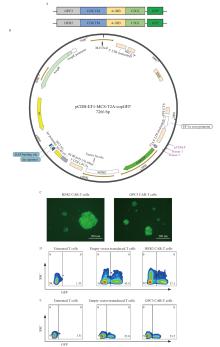
Fig. 1
The construction of CAR-T cell A: The structure of GPC3 CAR and HER2 CAR; B: The lentiviral vector; C: The immunofluorescence image of CAR-T cells; D, E: The detection of positive rate by flow cytometry."
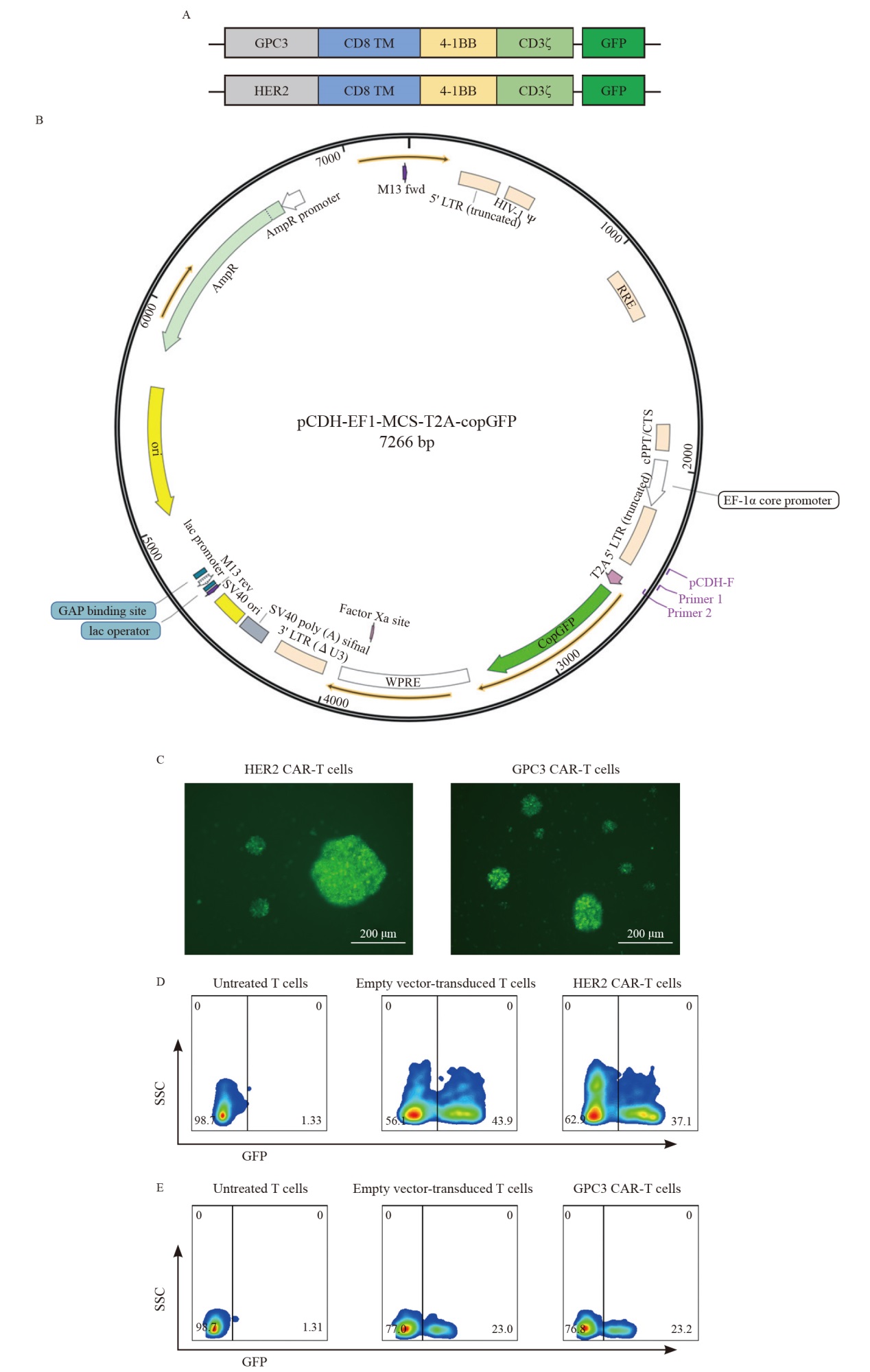
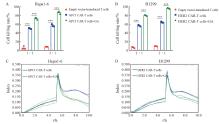
Fig. 2
LDH release (A, B) and real-time detection (C, D) to assess the effect of GA on the in vitro killing capacity of CAR-T cells ***: P<0.001, compared with GPC3 CAR-T cell or HER2 CAR-T cell."
Fig. 3
WB and flow cytometry were used to examine the effects of GA on the expression of senescence-related molecules (p53, p21, γ-H2AX) (A, B), SA-β-gal (C, D), CCR7 (E, F) and ROS (G) in mouse GPC3 CAR-T cells **: P<0.01; ***: P<0.001."
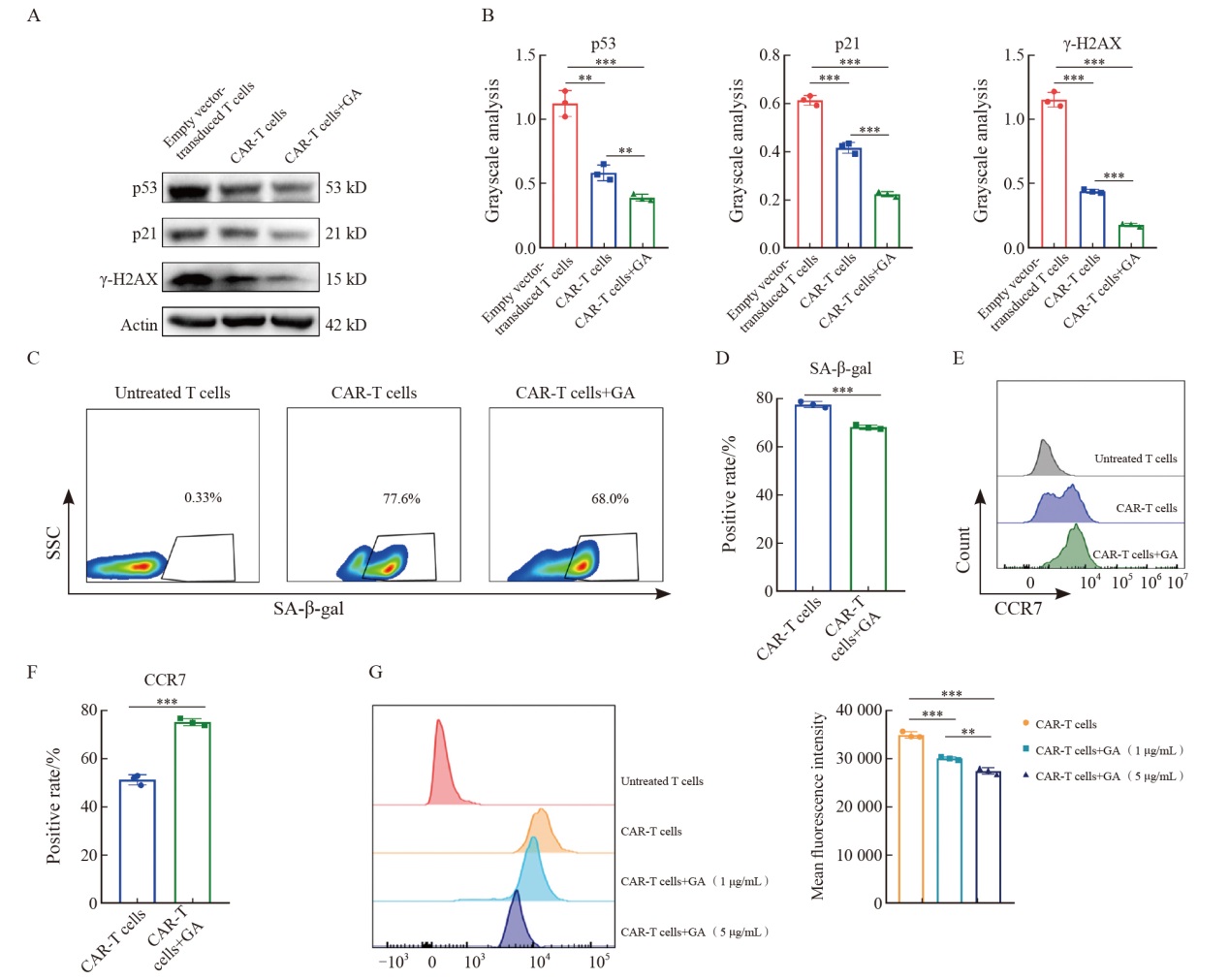
Fig. 4
The effect of GA on the in vivo anti-tumor function of CAR-T cells A: Experimental design; B, C: Tumor size was measured once every 2 d; D: Survival curve of tumor-bearing mice. **: P<0.01, compared with GPC3 CAR-T cell; ***: P<0.001, compared with GPC3 CAR-T cell."
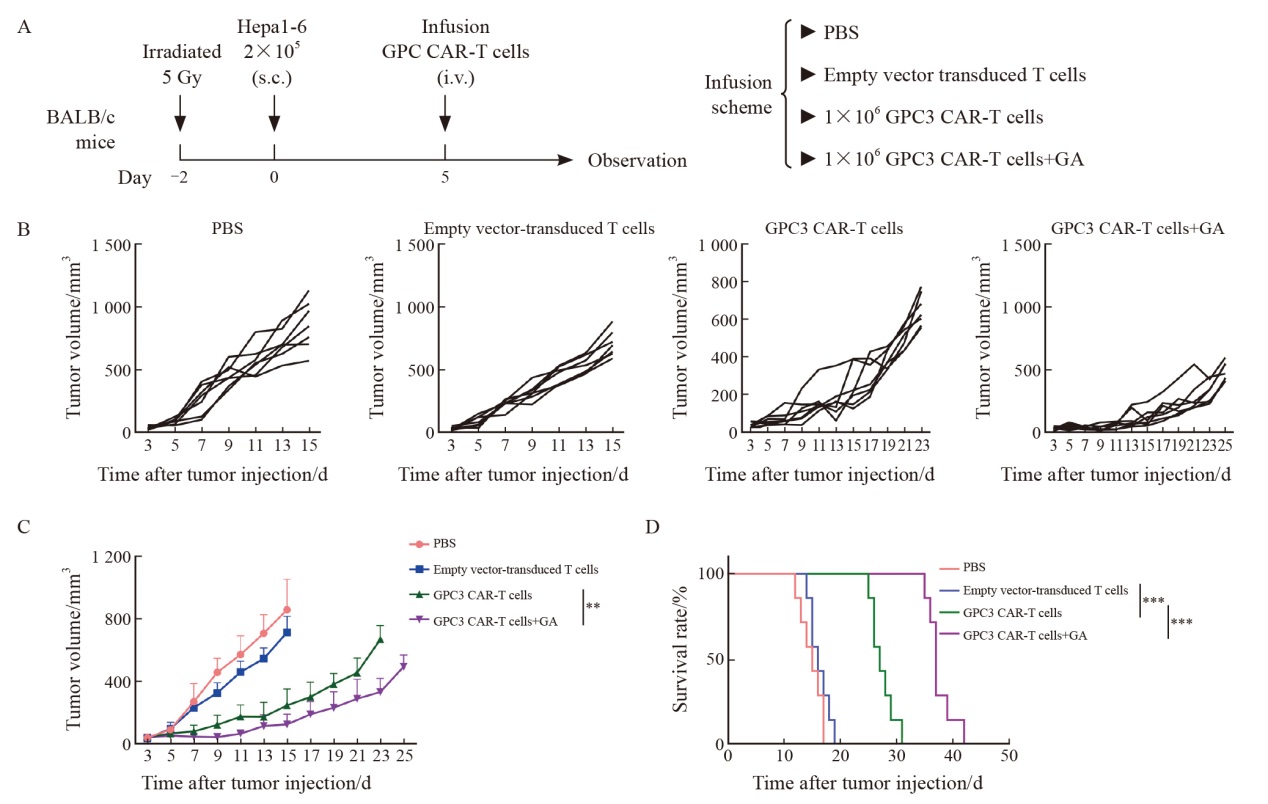
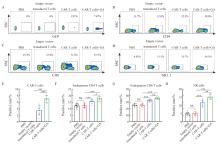
Fig. 5
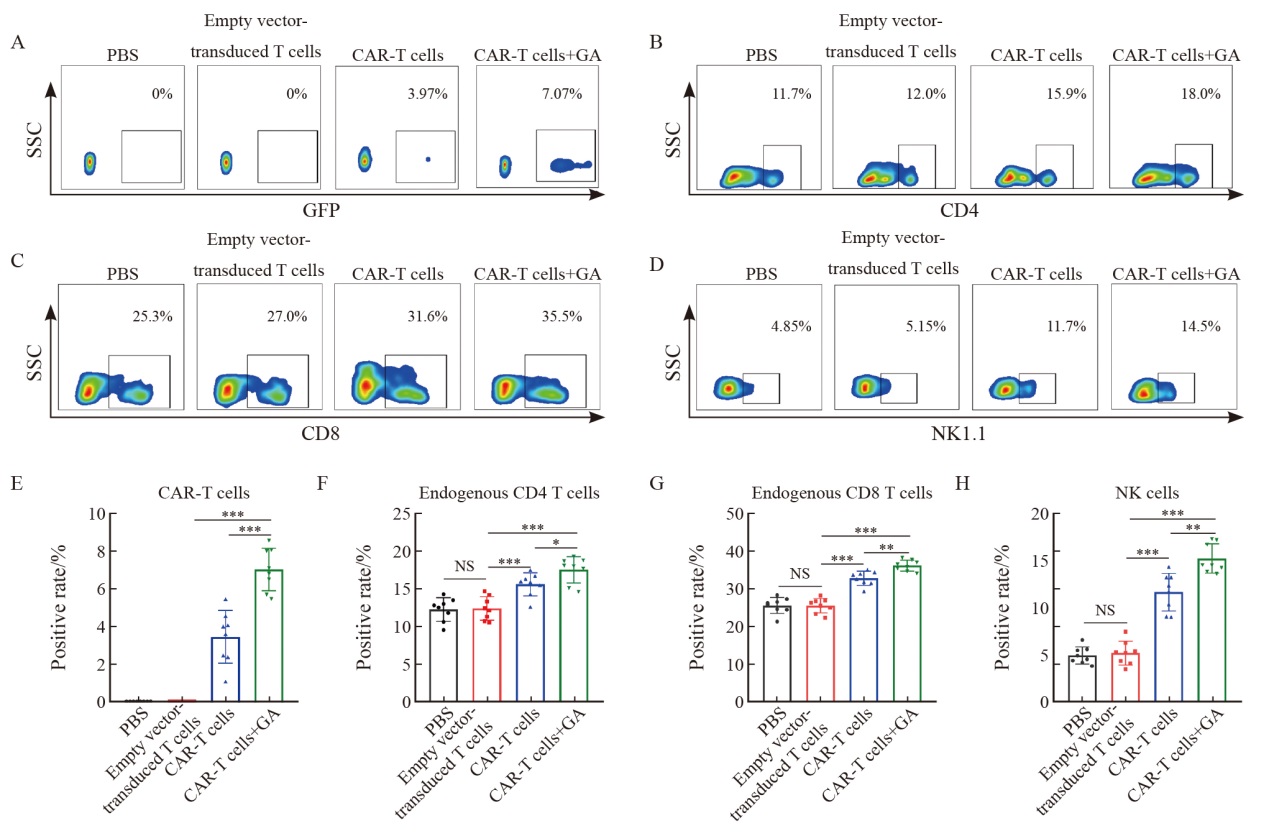
Flow cytometry analysis of the effects of GA on the infiltration ratios of CAR-T cells (A, E), CD4+ T cells (B, F), CD8+ T cells (C, G), and NK cells (D, H) in the TME *: P<0.05; **: P<0.01;***: P<0.001. NS: No significance."
| [1] |
PARK J H, RIVIÈRE I, GONEN M, et al. Long-term follow-up of CD19 CAR therapy in acute lymphoblastic leukemia[J]. N Engl J Med, 2018, 378(5): 449-459.
doi: 10.1056/NEJMoa1709919 |
| [2] |
SCHUSTER S J, BISHOP M R, TAM C S, et al. Tisagenlecleucel in adult relapsed or refractory diffuse large B-cell lymphoma[J]. N Engl J Med, 2019, 380(1): 45-56.
doi: 10.1056/NEJMoa1804980 |
| [3] |
FRAIETTA J A, LACEY S F, ORLANDO E J, et al. Determinants of response and resistance to CD19 chimeric antigen receptor (CAR) T cell therapy of chronic lymphocytic leukemia[J]. Nat Med, 2018, 24(5): 563-571.
doi: 10.1038/s41591-018-0010-1 pmid: 29713085 |
| [4] |
GRUPP S A, KALOS M, BARRETT D, et al. Chimeric antigen receptor-modified T cells for acute lymphoid leukemia[J]. N Engl J Med, 2013, 368(16): 1509-1518.
doi: 10.1056/NEJMoa1215134 |
| [5] |
MAUDE S L, FREY N, SHAW P A, et al. Chimeric antigen receptor T cells for sustained remissions in leukemia[J]. N Engl J Med, 2014, 371(16): 1507-1517.
doi: 10.1056/NEJMoa1407222 |
| [6] |
ZHAO Y, CHEN J Q, ANDREATTA M, et al. IL-10-expressing CAR T cells resist dysfunction and mediate durable clearance of solid tumors and metastases[J]. Nat Biotechnol, 2024, 42(11): 1693-1704.
doi: 10.1038/s41587-023-02060-8 pmid: 38168996 |
| [7] | XIAO Z B, TODD L, HUANG L, et al. Desmoplastic stroma restricts T cell extravasation and mediates immune exclusion and immunosuppression in solid tumors[J]. bioRxiv, 2023. |
| [8] |
ALBELDA S M. CAR T cell therapy for patients with solid tumours: key lessons to learn and unlearn[J]. Nat Rev Clin Oncol, 2024, 21(1): 47-66.
doi: 10.1038/s41571-023-00832-4 |
| [9] |
KHOSRAVI G R, MOSTAFAVI S, BASTAN S, et al. Immunologic tumor microenvironment modulators for turning cold tumors hot[J]. Cancer Commun, 2024, 44(5): 521-553.
doi: 10.1002/cac2.v44.5 |
| [10] |
LU Y, ZHENG J R, LIN P, et al. Tumor microenvironment-derived exosomes: a double-edged sword for advanced T cell-based immunotherapy[J]. ACS Nano, 2024, 18(40): 27230-27260.
doi: 10.1021/acsnano.4c09190 pmid: 39319751 |
| [11] |
ZHOU L Y, YI M. Editorial: Harnessing tumor microenvironment for gynecologic cancer therapy[J]. Front Immunol, 2024, 15: 1407128.
doi: 10.3389/fimmu.2024.1407128 |
| [12] |
GANJALıKHANI-HAKEMI M, YANIKKAYA DEMIREL G, HE X, et al. Editorial: immunologic tumor microenvironment modulators for turning “cold” tumors to “hot” tumors[J]. Front Immunol, 2024, 15: 1425136.
doi: 10.3389/fimmu.2024.1425136 |
| [13] | YAO L, ZHU X, SHAN Y Y, et al. Recent progress in anti-tumor nanodrugs based on tumor microenvironment redox regulation[J]. Small, 2024, 20(25): e2310018. |
| [14] |
ROSENQUIST R, DAVI F, GHIA P. The microenvironment in lymphomas: dissecting the complex crosstalk between tumor cells and ‘by-stander’ cells[J]. Semin Cancer Biol, 2014, 24: 1-2.
doi: 10.1016/j.semcancer.2013.12.002 |
| [15] |
KASAKOVSKI D, XU L, LI Y Q. T cell senescence and CAR-T cell exhaustion in hematological malignancies[J]. J Hematol Oncol, 2018, 11(1): 91.
doi: 10.1186/s13045-018-0629-x |
| [16] |
TOWERS R, TROMBELLO L, FUSENIG M, et al. Bone marrow-derived mesenchymal stromal cells obstruct AML-targeting CD8+ clonal effector and CAR T-cell function while promoting a senescence-associated phenotype[J]. Cancer Immunol Immunother, 2024, 73(1): 8.
doi: 10.1007/s00262-023-03594-1 |
| [17] |
ALEKSANDROVA K, LEISE J, PRIESNER C, et al. Functionality and cell senescence of CD4/CD8-selected CD20 CAR T cells manufactured using the automated CliniMACS prodigy® platform[J]. Transfus Med Hemother, 2019, 46(1): 47-54.
doi: 10.1159/000495772 |
| [18] |
WONG T S, MOHAMED TAP F, HASHIM Z, et al. Dual actions of gallic acid and andrographolide trigger AdipoR1 to stimulate insulin secretion in a streptozotocin-induced diabetes rat model[J]. J Tradit Complementary Med, 2023, 13(1): 11-19.
doi: 10.1016/j.jtcme.2022.09.002 |
| [19] |
BARAN C P, ZEIGLER M M, TRIDANDAPANI S, et al. The role of ROS and RNS in regulating life and death of blood monocytes[J]. Curr Pharm Des, 2004, 10(8): 855-866.
doi: 10.2174/1381612043452866 |
| [20] |
DENG B L, YANG B L, CHEN J Q, et al. Gallic acid induces T-helper-1-like T(reg) cells and strengthens immune checkpoint blockade efficacy[J]. J Immunother Cancer, 2022, 10(7): e004037.
doi: 10.1136/jitc-2021-004037 |
| [21] |
HUANG Q Q, JIANG X Y, WANG B X, et al. Gallic acid enhances GVL effects of T cells without exacerbating GVHD after haematopoietic stem cell transplantation[J]. Br J Haematol, 2025, 206(1): 120-132.
doi: 10.1111/bjh.v206.1 |
| [22] |
GARDNER R A, FINNEY O, ANNESLEY C, et al. Intent-to-treat leukemia remission by CD19 CAR T cells of defined formulation and dose in children and young adults[J]. Blood, 2017, 129(25): 3322-3331.
doi: 10.1182/blood-2017-02-769208 pmid: 28408462 |
| [23] |
CRISTOFALO V J, LORENZINI A, ALLEN R G, et al. Replicative senescence: a critical review[J]. Mech Ageing Dev, 2004, 125(10/11): 827-848.
doi: 10.1016/j.mad.2004.07.010 |
| [24] |
MA M, LI X, ZHONG M, et al. Galloylated toll-like receptor 7/8 agonist nanovaccine for enhanced tumor antigen delivery in personalized immunotherapy[J]. ACS Nano, 2025, 19(12): 11900-11912.
doi: 10.1021/acsnano.4c15442 pmid: 40102033 |
| [25] | DEDOUSSIS G V, KALIORA A C, ANDRIKOPOULOS N K. Effect of phenols on natural killer (NK) cell-mediated death in the K562 human leukemic cell line[J]. Cell Biol Int, 2005, 29(11): 884-889. |
| [26] |
NEO S Y, SIEW Y Y, YEW H C, et al. Effects of Leea indica leaf extracts and its phytoconstituents on natural killer cell-mediated cytotoxicity in human ovarian cancer[J]. BMC Complement Med Ther, 2023, 23(1): 79.
doi: 10.1186/s12906-023-03904-1 |
| [1] | LIU Hao, SU Junjie, XIN Shiyong. Mechanism study of MYC promoting proliferation and metastasis in prostate cancer by targeting CD47 [J]. China Oncology, 2025, 35(11): 987-1000. |
| [2] | YU Xue, SHEN Tianhao, ZHOU Cheng, LIU Yu, JIANG Tinghui, LI Wei, ZHU Yongqiang, LIU Yan. Research progress and prospects on the mechanisms of circulating tumor cells in the invasion and metastasis of cholangiocarcinoma [J]. China Oncology, 2025, 35(10): 952-958. |
| [3] | WANG Zifei, DING Yahui, LI Yan, LUAN Xin, TANG Min. Application of 3D bioprinting in cancer research and tissue engineering [J]. China Oncology, 2024, 34(9): 814-826. |
| [4] | WANG Manli, CHEN Hui, DUAN Zhi, XU Qimei, LI Zhen. A study on communication mechanism of lung cancer cells in tumor microenvironment mediated by pleckstrin-2/miR-196a signal axis [J]. China Oncology, 2024, 34(7): 628-638. |
| [5] | WANG Xiaocong, LI Ming. The value of single-cell sequencing in oral squamous cell carcinoma research [J]. China Oncology, 2024, 34(5): 501-508. |
| [6] | ZHANG Shaoqiu, YAN Li, LI Ruichen, ZHAO Yang, WANG Xiaoshen, YANG Xuguang, ZHU Yi. Recent advances and prospect in immune microenvironment and its mechanisms of function in head and neck squamous cell carcinoma [J]. China Oncology, 2023, 33(6): 629-636. |
| [7] | XUE Ying, MAO Yunyu, XU Jianqing. Progress in construction of hypoxia-sensitive CAR-T cell for solid tumor therapy [J]. China Oncology, 2023, 33(1): 71-77. |
| [8] | LIU Qiang, FANG Yi, WANG Jing. Application progress of single-cell sequencing technology in breast cancer research [J]. China Oncology, 2022, 32(7): 635-642. |
| [9] | SU Jiaqi, XU Wenhao, TIAN Xi, ANWAIE Aihetaimujiang, QU Yuanyuan, SHI Guohai, ZHANG Hailiang, YE Dingwei. New strategies for combined with immunotherapy of clear cell renal cell carcinoma: advances in aerobic glycolysis [J]. China Oncology, 2022, 32(4): 287-297. |
| [10] | ZHOU Shukui, ZHANG Dongliang, WANG Xiang, LIU Lei, LI Zeng, YANG Shengke, LIAO Hong. Developing a new animal model of subcutaneous transplanted prostate cancer with cell sheet technology [J]. China Oncology, 2022, 32(3): 200-206. |
| [11] | LI Fan, ZHANG Qinxing, TONG Xiangwen, TIAN Gaohui, GU Lixing, XU Yao. A study on influence of different signal peptides on anti-tumor effect of chimeric antigen receptor (CAR) T cells [J]. China Oncology, 2022, 32(2): 142-151. |
| [12] | LI Wei, ZHANG Shanling, TAO Yingjie, WANG Xudong. Research status and progress of mechanism of T cell immune metabolism and its application combined with immune checkpoint inhibitor [J]. China Oncology, 2021, 31(7): 640-646. |
| [13] | HAN Xiangchen, LI Xiaoguang, HU Xin. Single-cell RNA sequencing and its application in breast cancer [J]. China Oncology, 2021, 31(11): 1110-1114. |
| [14] | JIANG Mengyi , LU Yanqiao , WANG Hongxia . Research progress and clinical significance of breast cancer heterogeneity [J]. China Oncology, 2020, 30(5): 394-400. |
| [15] | FAN Shouren , WU Shuhua , LI Yangyang , XU Xiaoyang , HE Shuang , WEN Feifei , LIU Liu , GUO Ningjie , JIA Zhenzhen . The correlation between LC3 and tumor-associated macrophages in colorectal cancer and its clinical significance [J]. China Oncology, 2020, 30(11): 849-857. |
| Viewed | ||||||
|
Full text |
|
|||||
|
Abstract |
|
|||||
沪ICP备12009617
Powered by Beijing Magtech Co. Ltd

