欢迎访问《中国癌症杂志》官方网站,今天是
分享:
中国癌症杂志 ›› 2025, Vol. 35 ›› Issue (11): 1067-1075.doi: 10.19401/j.cnki.1007-3639.2025.11.009
王智凌( ), 陈万金, 程胜桃()(
 )
)
收稿日期:2025-04-14
修回日期:2025-07-15
出版日期:2025-11-30
发布日期:2025-12-12
通信作者:
程胜桃
E-mail:shengtao@cqmu.edu.cn
作者简介:王智凌(ORCID: 0009-0000-2007-4304),硕士在读。
基金资助:
WANG Zhiling(), CHEN Wanjin, CHENG Shengtao()()
Received:2025-04-14
Revised:2025-07-15
Published:2025-11-30
Online:2025-12-12
Contact:
CHENG Shengtao
E-mail:shengtao@cqmu.edu.cn
Supported by:文章分享
摘要:
恶性肿瘤作为全球公共卫生领域的重大挑战,迫切需要创新诊疗策略。乳酸作为肿瘤细胞糖酵解的重要代谢产物,不仅是能量代谢中间体,更以“代谢底物”和“信号分子”的双重身份参与肿瘤恶性进程的调控。具体而言,乳酸可通过单羧酸转运体(monocarboxylate transporter,MCT)介导的“乳酸穿梭”实现代谢物跨细胞分配,并借助组蛋白乳酰化修饰调控表观遗传,从而构建能量代谢、氨基酸代谢及脂代谢网络增强肿瘤细胞的代谢可塑性。在免疫调控层面,乳酸诱导T细胞向免疫抑制表型转化,阻碍CD8+ T细胞记忆分化并削弱细胞毒性。同时,乳酸不仅能够降低自然杀伤(natural killer,NK)细胞的免疫效能,还通过诱导线粒体功能障碍触发凋亡,为转移灶创造免疫豁免生态位。此外,高水平乳酸激活多条信号转导通路,募集并诱导巨噬细胞向M2型转化,构建免疫逃逸微环境。治疗策略方面,当前研究围绕乳酸代谢的关键环节展开多维度探索。抑制乳酸合成已成为逆转肿瘤代谢优势的重要治疗策略,通过靶向调控乳酸生成和转运的关键分子,减少肿瘤微环境(tumor microenvironment,TME)中乳酸的蓄积,从而削弱其对代谢重编程的驱动作用。此外,促进乳酸分解是当前极具潜力的代谢干预新方向,借助于生物酶或仿生催化系统,新型药物能够增强局部乳酸的清除效率,缓解酸性TME对免疫功能的抑制。本文系统综述乳酸介导的代谢-免疫调控网络,并探讨靶向乳酸通路的精准治疗策略,旨在打破肿瘤细胞的代谢适应性优势与免疫逃逸之间的恶性循环,为探索更高效的抗肿瘤疗法提供系统性的研究方向和转化思路。
中图分类号:
王智凌, 陈万金, 程胜桃. 乳酸调控肿瘤恶性进程的研究进展[J]. 中国癌症杂志, 2025, 35(11): 1067-1075.
WANG Zhiling, CHEN Wanjin, CHENG Shengtao. Research progress on the regulation of tumor malignancy by lactate[J]. China Oncology, 2025, 35(11): 1067-1075.
图1
乳酸重塑肿瘤细胞代谢过程的示意图"
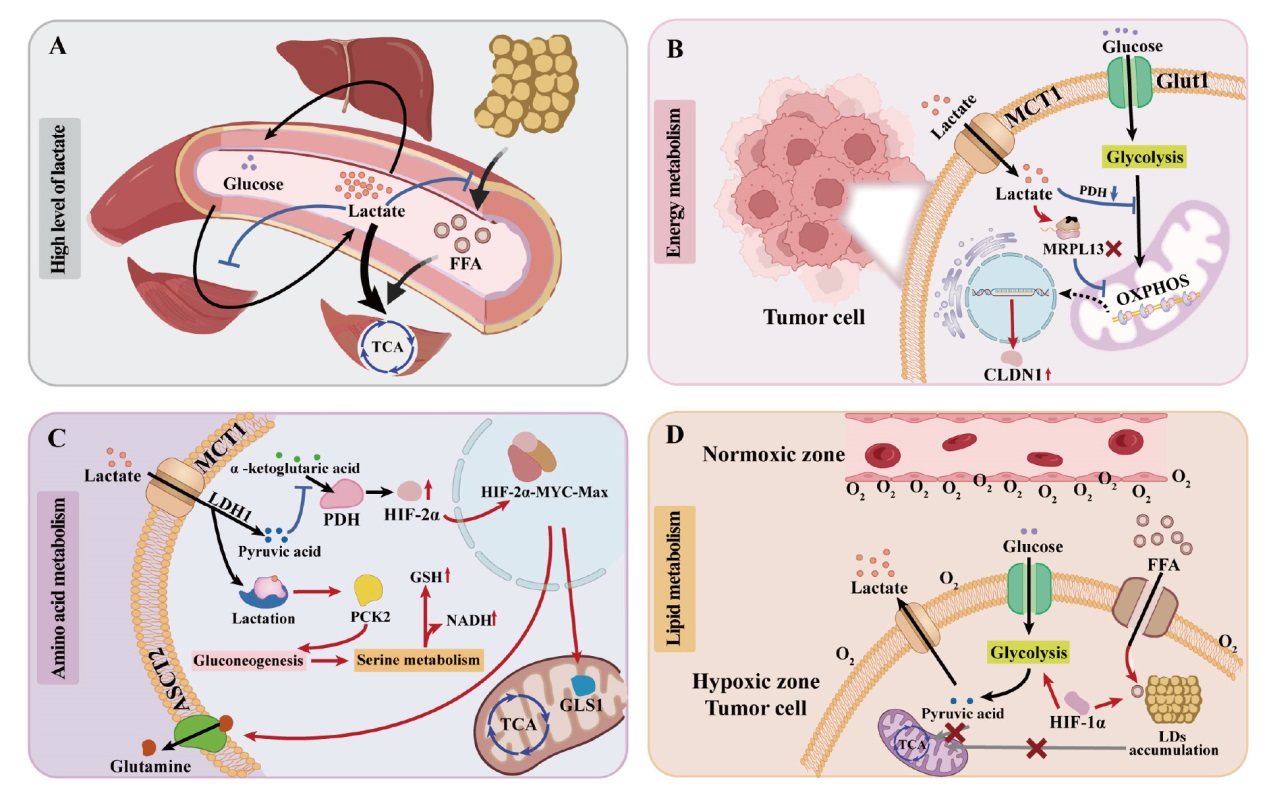
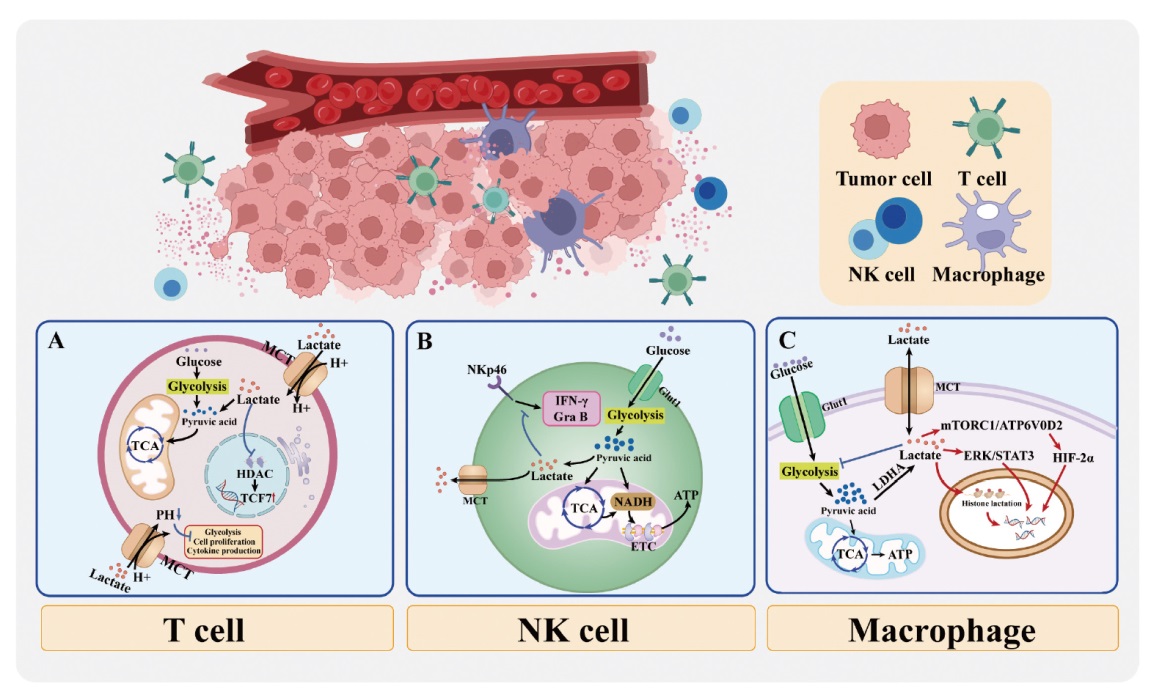
图2
乳酸重塑免疫抑制微环境的示意图"
| [1] | CAO W, QIN K, LI F, et al. Socioeconomic inequalities in cancer incidence and mortality: an analysis of GLOBOCAN 2022[J]. Chin Med J (Engl), 2024, 137(12): 1407-1413. |
| [2] | 郑荣寿, 陈茹, 韩冰峰, 等. 2022年中国恶性肿瘤流行情况分析[J]. 中华肿瘤杂志, 2024, 46(3): 221-231. |
| ZHENG R S, CHEN R, HAN B F, et al. Cancer incidence and mortality in China, 2022[J]. Chin J Oncol, 2024, 46(3): 221-231. | |
| [3] |
BROOKS G A. The tortuous path of lactate shuttle discovery: from cinders and boards to the lab and ICU[J]. J Sport Health Sci, 2020, 9(5): 446-460.
doi: S2095-2546(20)30019-3 pmid: 32444344 |
| [4] | WANG Q T, HU Y, WAN J L, et al. Lactate: a novel signaling molecule in synaptic plasticity and drug addiction[J]. Bioessays, 2019, 41(8): e1900008. |
| [5] |
EMHOFF C W, MESSONNIER L A, HORNING M A, et al. Gluconeogenesis and hepatic glycogenolysis during exercise at the lactate threshold[J]. J Appl Physiol (1985), 2013, 114(3): 297-306.
doi: 10.1152/japplphysiol.01202.2012 |
| [6] |
SHAO C, TANG S, YU S Q, et al. Genetic code expansion reveals site-specific lactylation in living cells reshapes protein functions[J]. Nat Commun, 2025, 16(1): 227.
doi: 10.1038/s41467-024-55165-2 |
| [7] |
HU Y, HE Z, LI Z, et al. Lactylation: the novel histone modification influence on gene expression, protein function, and disease[J]. Clin Epigenetics, 2024, 16(1): 72
doi: 10.1186/s13148-024-01682-2 pmid: 38812044 |
| [8] |
MAO Y, ZHANG J, ZHOU Q, et al. Hypoxia induces mitochondrial protein lactylation to limit oxidative phosphorylation[J]. Cell Res, 2024, 34(1): 13-30.
doi: 10.1038/s41422-023-00864-6 pmid: 38163844 |
| [9] |
LI L, CHEN K, WANG T, et al. Glis1 facilitates induction of pluripotency via an epigenome-metabolome-epigenome signalling cascade[J]. Nat Metab, 2020, 2(9): 882-92
doi: 10.1038/s42255-020-0267-9 |
| [10] |
ZHAO Q H, WANG Q, YAO Q H, et al. Nonenzymatic lysine D-lactylation induced by glyoxalase Ⅱ substrate SLG dampens inflammatory immune responses[J]. Cell Res, 2025, 35(2): 97-116.
doi: 10.1038/s41422-024-01060-w |
| [11] |
XU K, ZHANG K, WANG Y, et al. Comprehensive review of histone lactylation: structure, function, and therapeutic targets[J]. Biochem Pharmacol, 2024, 225: 116331.
doi: 10.1016/j.bcp.2024.116331 |
| [12] |
BROOKS G A. Cell-cell and intracellular lactate shuttles[J]. J Physiol, 2009, 587(Pt 23): 5591-5600.
doi: 10.1113/tjp.2009.587.issue-23 |
| [13] |
FAUBERT B, LI K Y, CAI L, et al. Lactate metabolism in human lung tumors[J]. Cell, 2017, 171(2): 358-371.e9.
doi: S0092-8674(17)31068-1 pmid: 28985563 |
| [14] |
WANG W T, ZHOU Y, LI W, et al. Claudins and hepatocellular carcinoma[J]. Biomed Pharmacother, 2024, 171: 116109.
doi: 10.1016/j.biopha.2023.116109 |
| [15] | WELCH D R. Tumor heterogeneity: a ‘contemporary concept’ founded on historical insights and predictions[J]. Cancer Res, 2016, 76(1): 4-6. |
| [16] |
ENRÍQUEZ J A, MITTELBRUNN M. Warburg effect reshapes tumor immunogenicity[J]. Cancer Res, 2024, 84(13): 2043-2045.
doi: 10.1158/0008-5472.CAN-24-1304 pmid: 38657107 |
| [17] |
CAPATINA A L, MALCOLM J R, STENNING J, et al. Hypoxia-induced epigenetic regulation of breast cancer progression and the tumour microenvironment[J]. Front Cell Dev Biol, 2024, 12: 1421629.
doi: 10.3389/fcell.2024.1421629 |
| [18] |
ZHANG G Q, XI C, JU N T, et al. Targeting glutamine metabolism exhibits anti-tumor effects in thyroid cancer[J]. J Endocrinol Invest, 2024, 47(8): 1953-1969.
doi: 10.1007/s40618-023-02294-y pmid: 38386265 |
| [19] |
XUAN D T M, WU C C, WANG W J, et al. Glutamine synthetase regulates the immune microenvironment and cancer development through the inflammatory pathway[J]. Int J Med Sci, 2023, 20(1): 35-49.
doi: 10.7150/ijms.75625 pmid: 36619229 |
| [20] |
MA Y, LING S K, LI Y, et al. Loss of heterozygosity for Kras G12D promotes malignant phenotype of pancreatic ductal adenocarcinoma by activating HIF-2α-c-myc-regulated glutamine metabolism[J]. Int J Mol Sci, 2022, 23(12): 6697.
doi: 10.3390/ijms23126697 |
| [21] |
WEN Q, HUANG M H, XIE J W, et al. lncRNA SYTL5-OT4 promotes vessel co-option by inhibiting the autophagic degradation of ASCT2[J]. Drug Resist Updat, 2023, 69: 100975.
doi: 10.1016/j.drup.2023.100975 |
| [22] |
HU H X, TAKANO N, XIANG L S, et al. Hypoxia-inducible factors enhance glutamate signaling in cancer cells[J]. Oncotarget, 2014, 5(19): 8853-8868.
doi: 10.18632/oncotarget.2593 pmid: 25326682 |
| [23] |
LAU A, BLENIS J, BURGOS-BARRAGAN G. Decoding serine metabolism: unveiling novel pathways for evolving cancer therapies[J]. Cancer Res, 2024, 84(8): 1191-1194.
doi: 10.1158/0008-5472.CAN-24-0541 pmid: 38364233 |
| [24] | LU Y X, ZHU J H, ZHANG Y X, et al. Lactylation-driven IGF2BP3-mediated serine metabolism reprogramming and RNA m6A-modification promotes lenvatinib resistance in HCC[J]. Adv Sci (Weinh), 2024, 11(46): e2401399. |
| [25] |
QIAO Z, LI Y, LI S M, et al. Hypoxia-induced SHMT2 protein lactylation facilitates glycolysis and stemness of esophageal cancer cells[J]. Mol Cell Biochem, 2024, 479(11): 3063-3076.
doi: 10.1007/s11010-023-04913-x pmid: 38175377 |
| [26] |
NAGANA GOWDA G A, LUSK J A, PASCUA V. Intracellular pyruvate-lactate-alanine cycling detected using real-time nuclear magnetic resonance spectroscopy of live cells and isolated mitochondria[J]. Magn Reson Chem, 2024, 62(2): 84-93.
doi: 10.1002/mrc.v62.2 |
| [27] |
GREEN C R, ALAEDDINE L M, WESSENDORF-RODRIGUEZ K A, et al. Impaired branched-chain amino acid (BCAA) catabolism during adipocyte differentiation decreases glycolytic flux[J]. J Biol Chem, 2024, 300(12): 108004.
doi: 10.1016/j.jbc.2024.108004 |
| [28] |
KONDO A, YAMAMOTO S, NAKAKI R, et al. Extracellular acidic pH activates the sterol regulatory element-binding protein 2 to promote tumor progression[J]. Cell Rep, 2017, 18(9): 2228-2242.
doi: S2211-1247(17)30171-7 pmid: 28249167 |
| [29] |
IPPOLITO L, COMITO G, PARRI M, et al. Lactate rewires lipid metabolism and sustains a metabolic-epigenetic axis in prostate cancer[J]. Cancer Res, 2022, 82(7): 1267-1282.
doi: 10.1158/0008-5472.CAN-21-0914 pmid: 35135811 |
| [30] |
CORBET C, BASTIEN E, SANTIAGO DE JESUS J P, et al. TGFβ2-induced formation of lipid droplets supports acidosis-driven EMT and the metastatic spreading of cancer cells[J]. Nat Commun, 2020, 11(1): 454.
doi: 10.1038/s41467-019-14262-3 pmid: 31974393 |
| [31] |
IPPOLITO L, COMITO G, PARRI M, et al. Lactate rewires lipid metabolism and sustains a metabolic-epigenetic axis in prostate cancer[J]. Cancer Res, 2022, 82(7): 1267-82.
doi: 10.1158/0008-5472.CAN-21-0914 pmid: 35135811 |
| [32] |
MENG Y, GUO D, LIN L, et al. Glycolytic enzyme PFKL governs lipolysis by promoting lipid droplet-mitochondria tethering to enhance β-oxidation and tumor cell proliferation[J]. Nat Metab, 2024, 6(6): 1092-107.
doi: 10.1038/s42255-024-01047-2 pmid: 38773347 |
| [33] |
WAN J, CHENG C, HU J J, et al. De novo NAD+ synthesis contributes to CD8+T cell metabolic fitness and antitumor function[J]. Cell Rep, 2023, 42(12): 113518.
doi: 10.1016/j.celrep.2023.113518 |
| [34] | TURNER L, VAN LE T N, CROSS E, et al. Single-cell NAD(H) levels predict clonal lymphocyte expansion dynamics[J]. Sci Immunol, 2024, 9(93): eadj7238. |
| [35] |
PAN W L, TSOKOS M G, SCHERLINGER M, et al. The PP2A regulatory subunit PPP2R2A controls NAD+ biosynthesis to regulate T cell subset differentiation in systemic autoimmunity[J]. Cell Rep, 2024, 43(7): 114379.
doi: 10.1016/j.celrep.2024.114379 |
| [36] | CHEN X Y, LIU L L, KANG S W, et al. The lactate dehydrogenase (LDH) isoenzyme spectrum enables optimally controlling T cell glycolysis and differentiation[J]. Sci Adv, 2023, 9(12): eadd9554. |
| [37] |
PERALTA R M, XIE B X, LONTOS K, et al. Dysfunction of exhausted T cells is enforced by MCT11-mediated lactate metabolism[J]. Nat Immunol, 2024, 25(12): 2297-2307.
doi: 10.1038/s41590-024-01999-3 pmid: 39516648 |
| [38] |
FANG Y, LIU W R, TANG Z, et al. Monocarboxylate transporter 4 inhibition potentiates hepatocellular carcinoma immunotherapy through enhancing T cell infiltration and immune attack[J]. Hepatology, 2023, 77(1): 109-123.
doi: 10.1002/hep.32348 |
| [39] |
BARBIERI L, VELIÇA P, GAMEIRO P A, et al. Lactate exposure shapes the metabolic and transcriptomic profile of CD8+T cells[J]. Front Immunol, 2023, 14: 1101433.
doi: 10.3389/fimmu.2023.1101433 |
| [40] | D’ARIA S, MAQUET C, LI S, et al. Expression of the monocarboxylate transporter MCT1 is required for virus-specific mouse CD8+T cell memory development[J]. Proc Natl Acad Sci USA, 2024, 121(13): e2306763121. |
| [41] |
SUKUMAR M, LIU J, JI Y, et al. Inhibiting glycolytic metabolism enhances CD8+T cell memory and antitumor function[J]. J Clin Invest, 2013, 123(10): 4479-4488.
doi: 10.1172/JCI69589 |
| [42] |
WATSON M J, VIGNALI P D A, MULLETT S J, et al. Metabolic support of tumour-infiltrating regulatory T cells by lactic acid[J]. Nature, 2021, 591(7851): 645-651.
doi: 10.1038/s41586-020-03045-2 |
| [43] |
KONDO M, KUMAGAI S, NISHIKAWA H. Metabolic advantages of regulatory T cells dictated by cancer cells[J]. Int Immunol, 2024, 36(2): 75-86.
doi: 10.1093/intimm/dxad035 |
| [44] |
ZHANG Y N, HUANG Y T, HONG Y, et al. Lactate acid promotes PD-1+ Tregs accumulation in the bone marrow with high tumor burden of acute myeloid leukemia[J]. Int Immunopharmacol, 2024, 130: 111765.
doi: 10.1016/j.intimp.2024.111765 |
| [45] |
TUOMELA K, LEVINGS M K. Acidity promotes the differentiation of immunosuppressive regulatory T cells[J]. Eur J Immunol, 2023, 53(6): 2350511.
doi: 10.1002/eji.v53.6 |
| [46] | RAO D S, STUNNENBERG J A, LACROIX R, et al. Acidity-mediated induction of FoxP3+ regulatory T cells[J]. Eur J Immunol, 2023, 53(6): e2250258. |
| [47] |
ZHANG Y T, XING M L, FANG H H, et al. Effects of lactate on metabolism and differentiation of CD4+T cells[J]. Mol Immunol, 2023, 154: 96-107.
doi: 10.1016/j.molimm.2022.12.015 |
| [48] |
ZHANG W H, YUAN S J, ZHANG Z P, et al. Regulating tumor cells to awaken T cell antitumor function and enhance melanoma immunotherapy[J]. Biomaterials, 2025, 316: 123034.
doi: 10.1016/j.biomaterials.2024.123034 |
| [49] |
MA J W, TANG L, TAN Y Y, et al. Lithium carbonate revitalizes tumor-reactive CD8+T cells by shunting lactic acid into mitochondria[J]. Nat Immunol, 2024, 25(3): 552-561.
doi: 10.1038/s41590-023-01738-0 |
| [50] | GE W L, MENG L D, CAO S J, et al. The SIX1/LDHA axis promotes lactate accumulation and leads to NK cell dysfunction in pancreatic cancer[J]. J Immunol Res, 2023, 2023: 6891636. |
| [51] |
BRAND A, SINGER K, KOEHL G E, et al. LDHA-associated lactic acid production blunts tumor immunosurveillance by T and NK cells[J]. Cell Metab, 2016, 24(5): 657-671.
doi: S1550-4131(16)30427-2 pmid: 27641098 |
| [52] | LUO Z H, HUANG X H, XU X Y, et al. Decreased LDHB expression in breast tumor cells causes NK cell activation and promotes tumor progression[J]. Cancer Biol Med, 2024, 21(6): 513-540. |
| [53] |
NETSKAR H, PFEFFERLE A, GOODRIDGE J P, et al. Pan-cancer profiling of tumor-infiltrating natural killer cells through transcriptional reference mapping[J]. Nat Immunol, 2024, 25(8): 1445-1459.
doi: 10.1038/s41590-024-01884-z pmid: 38956379 |
| [54] |
GLASNER A, LEVI A, ENK J, et al. NKp46 receptor-mediated interferon-γ production by natural killer cells increases fibronectin 1 to alter tumor architecture and control metastasis[J]. Immunity, 2018, 48(1): 107-119.e4.
doi: S1074-7613(17)30536-8 pmid: 29329948 |
| [55] |
HARMON C, ROBINSON M W, HAND F, et al. Lactate-mediated acidification of tumor microenvironment induces apoptosis of liver-resident NK cells in colorectal liver metastasis[J]. Cancer Immunol Res, 2019, 7(2): 335-346.
doi: 10.1158/2326-6066.CIR-18-0481 pmid: 30563827 |
| [56] |
DODARD G, TATA A, ERICK T K, et al. Inflammation-induced lactate leads to rapid loss of hepatic tissue-resident NK cells[J]. Cell Rep, 2020, 32(1): 107855
doi: 10.1016/j.celrep.2020.107855 |
| [57] |
ZHANG Y P, ZHONG F, LIU L. Single-cell transcriptional atlas of tumor-associated macrophages in breast cancer[J]. Breast Cancer Res, 2024, 26(1): 129.
doi: 10.1186/s13058-024-01887-6 pmid: 39232806 |
| [58] |
LIU N, LUO J, KUANG D, et al. Lactate inhibits ATP6V0d2 expression in tumor-associated macrophages to promote HIF-2α-mediated tumor progression[J]. J Clin Invest, 2019, 129(2): 631-646.
doi: 10.1172/JCI123027 pmid: 30431439 |
| [59] |
CAI Z N, LI W, HAGER S, et al. Targeting PHGDH reverses the immunosuppressive phenotype of tumor-associated macrophages through α-ketoglutarate and mTORC1 signaling[J]. Cell Mol Immunol, 2024, 21(5): 448-465.
doi: 10.1038/s41423-024-01134-0 pmid: 38409249 |
| [60] | VADEVOO S M P, GUNASSEKARAN G R, LEE C, et al. The macrophage odorant receptor Olfr78 mediates the lactate-induced M2 phenotype of tumor-associated macrophages[J]. Proc Natl Acad Sci USA, 2021, 118(37): e2102434118. |
| [61] |
KHAN F, LIN Y Y, ALI H B, et al. Lactate dehydrogenase A regulates tumor-macrophage symbiosis to promote glioblastoma progression[J]. Nat Commun, 2024, 15(1): 1987.
doi: 10.1038/s41467-024-46193-z pmid: 38443336 |
| [62] |
LIU M Y, REN Y, ZHOU Z J, et al. The crosstalk between macrophages and cancer cells potentiates pancreatic cancer cachexia[J]. Cancer Cell, 2024, 42(5): 885-903.e4.
doi: 10.1016/j.ccell.2024.03.009 pmid: 38608702 |
| [63] |
JIANG R, REN W J, WANG L Y, et al. Targeting lactate: an emerging strategy for macrophage regulation in chronic inflammation and cancer[J]. Biomolecules, 2024, 14(10): 1202.
doi: 10.3390/biom14101202 |
| [64] |
SHU M, LU D C, ZHU Z Y, et al. Insight into the roles of lactylation in macrophages: functions and clinical implications[J]. Clin Sci (Lond), 2025, 139(2): 151-169.
doi: 10.1042/CS20242737 |
| [65] |
SUN J R, FENG Q M, HE Y, et al. Lactate activates CCL18 expression via H3K18 lactylation in macrophages to promote tumorigenesis of ovarian cancer[J]. Acta Biochim Biophys Sin (Shanghai), 2024, 56(9): 1373-1386.
doi: 10.3724/abbs.2024111 |
| [66] |
SACHA M, FAUCON L, HAMON E, et al. Ex vivo transdermal absorption of a liposome formulation of diclofenac[J]. Biomed Pharmacother, 2019, 111: 785-790.
doi: 10.1016/j.biopha.2018.12.079 |
| [67] | LI X L, JIANG C, WANG Q H, et al. A “valve-closing” starvation strategy for amplification of tumor-specific chemotherapy[J]. Adv Sci (Weinh), 2022, 9(8): e2104671. |
| [68] |
BRESINSKY M, GOEPFERICH A. Control of biomedical nanoparticle distribution and drug release in vivo by complex particle design strategies[J]. Eur J Pharm Biopharm, 2025, 208: 114634.
doi: 10.1016/j.ejpb.2025.114634 |
| [69] |
DING X L, LIU M D, CHENG Q, et al. Multifunctional liquid metal-based nanoparticles with glycolysis and mitochondrial metabolism inhibition for tumor photothermal therapy[J]. Biomaterials, 2022, 281: 121369.
doi: 10.1016/j.biomaterials.2022.121369 |
| [70] |
DUAN R X, XU Y Y, ZENG X M, et al. Uncovering the metabolic origin of aspartate for tumor growth using an integrated molecular deactivator[J]. Nano Lett, 2021, 21(1): 778-784.
doi: 10.1021/acs.nanolett.0c04520 pmid: 33301328 |
| [71] | WANG D W, REN X H, MA Y J, et al. Dual-template epitope imprinted nanoparticles for anti-glycolytic tumor-targeted treatment[J]. J Colloid Interface Sci, 2025, 683(Pt 2): 890-905. |
| [72] |
FARAH C, NEVEU M A, BOUZIN C, et al. Hyperpolarized 13C-pyruvate to assess response to anti-PD1 immune checkpoint inhibition in YUMMER 1.7 melanoma xenografts[J]. Int J Mol Sci, 2023, 24(3): 2499.
doi: 10.3390/ijms24032499 |
| [73] |
ZHOU J R, HU Y P, CAO Y H, et al. A Lactate-Depleting metal organic framework-based nanocatalyst reinforces intratumoral T cell response to boost anti-PD1 immunotherapy[J]. J Colloid Interface Sci, 2024, 660: 869-884.
doi: 10.1016/j.jcis.2024.01.129 |
| [74] |
WANG H J, WU C H, TONG X W, et al. A biomimetic metal-organic framework nanosystem modulates immunosuppressive tumor microenvironment metabolism to amplify immunotherapy[J]. J Control Release, 2023, 353: 727-737.
doi: 10.1016/j.jconrel.2022.11.054 |
| [75] |
SOMCHOB B, PROMPHET N, RODTHONGKUM N, et al. Zwitterionic hydrogel for preserving stability and activity of oxidase enzyme for electrochemical biosensor[J]. Talanta, 2024, 270: 125510.
doi: 10.1016/j.talanta.2023.125510 |
| [76] |
CHOI H, YEO M, KANG Y J, et al. Lactate oxidase/catalase-displaying nanoparticles efficiently consume lactate in the tumor microenvironment to effectively suppress tumor growth[J]. J Nanobiotechnology, 2023, 21(1): 5.
doi: 10.1186/s12951-022-01762-6 |
| [77] | ZHAO S F, HOU J N, DENG L, et al. Lactate-modulating nanozyme-mediated mitochondrial respiration block for tumor immunosuppression remodeling[J]. Angew Chem Int Ed, 2025, 64(17): e202422203. |
| [78] |
ZHAO S F, LI H H, LIU R Y, et al. Nitrogen-centered lactate oxidase nanozyme for tumor lactate modulation and microenvironment remodeling[J]. J Am Chem Soc, 2023, 145(18): 10322-10332.
doi: 10.1021/jacs.3c02005 |
| [79] |
NIE T Q, FANG Y F, ZHANG R H, et al. Self-healable and pH-responsive spermidine/ferrous ion complexed hydrogel co-loaded with CA inhibitor and glucose oxidase for combined cancer immunotherapy through triple ferroptosis mechanism[J]. Bioact Mater, 2025, 47: 51-63.
doi: 10.1016/j.bioactmat.2025.01.005 pmid: 39877156 |
| [80] | MAO L Z, XARPIDIN B, SHI R, et al. Natural enzyme-loaded polymeric stealth coating-armed engineered probiotics by disrupting tumor lactate homeostasis to synergistic metabolism-immuno-enzyme dynamic therapy[J]. Adv Sci (Weinh), 2025, 12(16): e2417172. |
| [1] | 郭晓玉, 曲秀娟. 胃癌领域抗肿瘤药物相关间质性肺病/肺炎的研究进展及展望[J]. 中国癌症杂志, 2025, 35(9): 874-883. |
| [2] | 何超, 周夜夜, 章斌, 邓胜明. 18F-FDG PET/CT代谢参数对接受CAR-T治疗的弥漫大B细胞淋巴瘤患者预后价值的队列研究[J]. 中国癌症杂志, 2025, 35(8): 743-751. |
| [3] | 吴佳辰, 何丽娜, 汤鑫茹, 唐爽. Ptenfl/fl;Trp53fl/fl;Pbsn-iCre+基因编辑小鼠自发形成前列腺癌与乳腺癌的模型构建研究[J]. 中国癌症杂志, 2025, 35(8): 769-775. |
| [4] | 刘春, 陈国心, 李梦甜, 赵钰, 马忠仁, 张海霞. 病毒样颗粒在肿瘤治疗中的应用研究进展及展望[J]. 中国癌症杂志, 2025, 35(6): 585-591. |
| [5] | 龚卫华, 陈兰, 赵昆, 柯追, 许青, 郭献灵. 端粒酶抑制剂BIBR1532联合自噬抑制剂CQ抑制黑色素瘤细胞生存的机制研究[J]. 中国癌症杂志, 2025, 35(5): 431-439. |
| [6] | 应磊磊, 李珂宁, 陈超, 王英, 黄浩哲, 王标, 李文涛, 何新红. 肿瘤直径对结直肠癌肺转移患者射频消融术后生存及局部进展风险的影响研究[J]. 中国癌症杂志, 2025, 35(5): 449-456. |
| [7] | 王星, 肖枘伶, 白嘉璐, 蒋德诚, 周飞晗, 罗稀元, 唐玥萌, 赵玉沛. 肿瘤嗜器官性转移的双向选择与共同适应机制[J]. 中国癌症杂志, 2025, 35(5): 485-495. |
| [8] | 胡玮, 任晓朦, 王洋, 赵培庆, 曹凯. TIPE通过调控LDHA表达影响三阴性乳腺癌糖代谢重编程机制研究[J]. 中国癌症杂志, 2025, 35(4): 386-393. |
| [9] | 曾丹丹, 罗文凤, 叶甲舟, 林燕, 梁嵘. 组蛋白乳酸化在消化系统肿瘤中的研究进展及展望[J]. 中国癌症杂志, 2025, 35(4): 424-430. |
| [10] | 赵锴乐, 王磊, 耿健雄, 崔成伟, 于雁. 恶性胸膜间皮瘤治疗的研究现状与展望[J]. 中国癌症杂志, 2025, 35(3): 326-332. |
| [11] | 安天棋, 田建辉, 周奕阳, 罗斌, 阙祖俊, 刘瑶, 于盼, 赵瑞华, 杨蕴. 免疫检查点抑制剂治疗相关胸腔积液的研究进展[J]. 中国癌症杂志, 2025, 35(3): 333-338. |
| [12] | 蓝煜, 王风华. 2024晚期胃癌诊疗指南更新对比与梳理:CSCO、NCCN和ESMO[J]. 中国癌症杂志, 2025, 35(2): 219-227. |
| [13] | 蔡舒玥, 谢佺, 周雨萱, 刘清竹, 邱玲, 林建国. NRP-1靶向分子探针助力乳腺癌诊断的最新进展及展望[J]. 中国癌症杂志, 2025, 35(2): 249-254. |
| [14] | 赵家旋, 王伊玄, 田高辉, 史江舟, 张同存. CAR-γδ T细胞生产工艺的优化研究[J]. 中国癌症杂志, 2025, 35(11): 1019-1031. |
| [15] | 孙大玮, 于金玉, 张鑫, 赵松柏, 张显政. 没食子酸增强CAR-T细胞抗实体瘤作用的研究[J]. 中国癌症杂志, 2025, 35(11): 1032-1040. |
| 阅读次数 | ||||||
|
全文 |
|
|||||
|
摘要 |
|
|||||
地址:上海市徐汇区东安路270号复旦大学附属肿瘤医院10号楼415室
邮编:200032 电话:021-64188274 E-mail:zgazzz@china-oncology.com
访问总数:; 今日访问总数:; 当前在线人数:
本系统由北京玛格泰克科技发展有限公司设计开发 技术支持:support@magtech.com.cn

